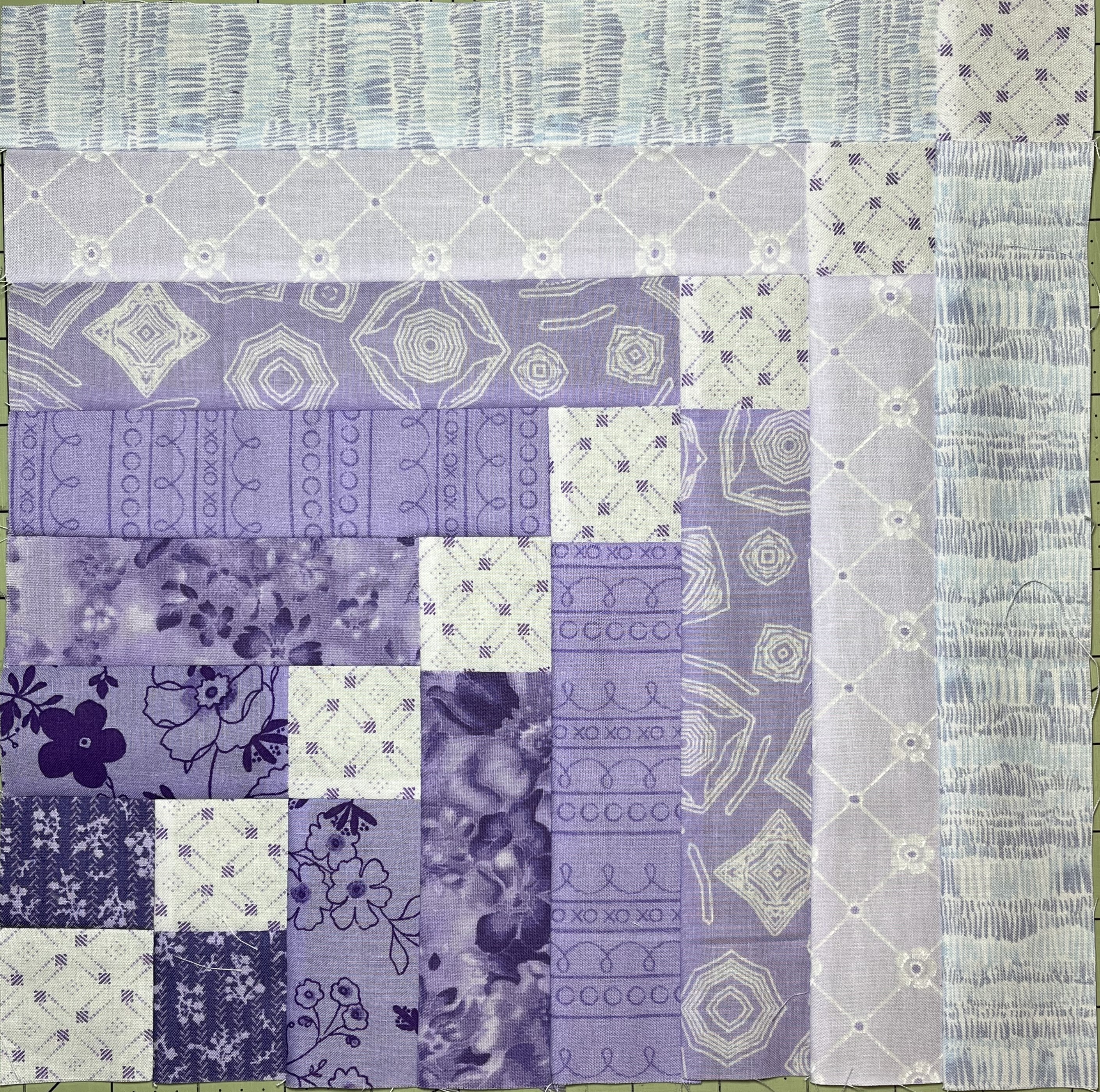
The log cabin quilt block is a classic and timeless design that has been popular for centuries. Its’ simple yet elegant design makes it a favorite among quilters of all skill levels. In this blog post, we will explore the origin of the log cabin quilt, variations of the log cabin block, and tips to make the perfect log cabin block. This block is from a quilt my grandmother made many years ago.

Origin of the Log Cabin Quilt
The log cabin quilt block has a rich history dating back to the pioneer days in America. The block was inspired by the log cabins that the pioneers built during their travels westward. The log cabins were built with logs stacked in a square or rectangular shape, and each layer of logs was added in a clockwise or counterclockwise direction. The log cabin quilt block mimics the structure of these cabins by adding strips of fabric in a clockwise or counterclockwise direction around a center square. This style of quilting was popular in the mid-1800s and is still used today.

Variations of the Log Cabin Block
The log cabin block can be customized in a variety of ways to create different designs. Here are some variations of the log cabin block:
- Traditional Log Cabin Block: The traditional log cabin block has a center square surrounded by strips of fabric added in a clockwise or counterclockwise direction. Each strip is sewn to the previous one, with the seam allowance pressed away from the center square. The traditional log cabin block has eight strips, with the last one being the same width as the center square.
- Courthouse Steps: The courthouse steps variation of the log cabin block adds strips of fabric to opposite sides of the center square, then adds strips to the sides opposite to those, creating a step-like design. This variation is a great way to showcase a gradient of colors or a series of prints.
- Barn Raising: The barn raising variation of the log cabin block creates the illusion of a barn raising by adding strips of fabric in a light-to-dark color progression. This variation can be used to create a dramatic and eye-catching design.
- Pineapple: The pineapple variation of the log cabin block uses triangular strips of fabric to create a more complex design that resembles a pineapple. This variation is perfect for those who want to challenge their quilting skills and create a unique and intricate design.
- Wonky Log Cabin: The wonky log cabin variation of the log cabin block is a fun and playful way to create a log cabin block. Instead of adding strips of fabric in a straight line, the strips are added at different angles, creating a wonky and asymmetrical design.
- Curved Log Cabin: The curved log cabin variation of the log cabin block adds a curved element to the traditional log cabin design. This variation can be used to create a flowing and dynamic design that adds movement to your quilt.
- Scrappy Log Cabin: The scrappy log cabin variation of the log cabin block uses scraps of fabric to create a colorful and eclectic design. This variation is perfect for using up scraps of fabric from previous projects and creating a unique and personalized design.


Tips to Make the Perfect Log Cabin Block
Here are some tips to help you create the perfect log cabin block:
- Use high-quality fabric to ensure that your block looks and feels great.
- Use a consistent seam allowance to ensure that your strips line up evenly.
- Press your seams as you go to prevent bulk and ensure that your block lays flat.
- Trim your block after each strip to ensure that it is square and even.
- Experiment with color and pattern to create a unique and personalized log cabin block.
Leave a Reply